- In 2025, the Government’s Delegation to the European Union promoted an agenda to strengthen Catalonia’s institutional presence, participate in European decision-making spaces, and raise the region’s profile through initiatives and country projection.
- It has been a year of intense activity, aimed at reinforcing Catalonia’s presence in Brussels, expanding participation and influence within EU institutions, and actively contributing to major debates shaping the European project.
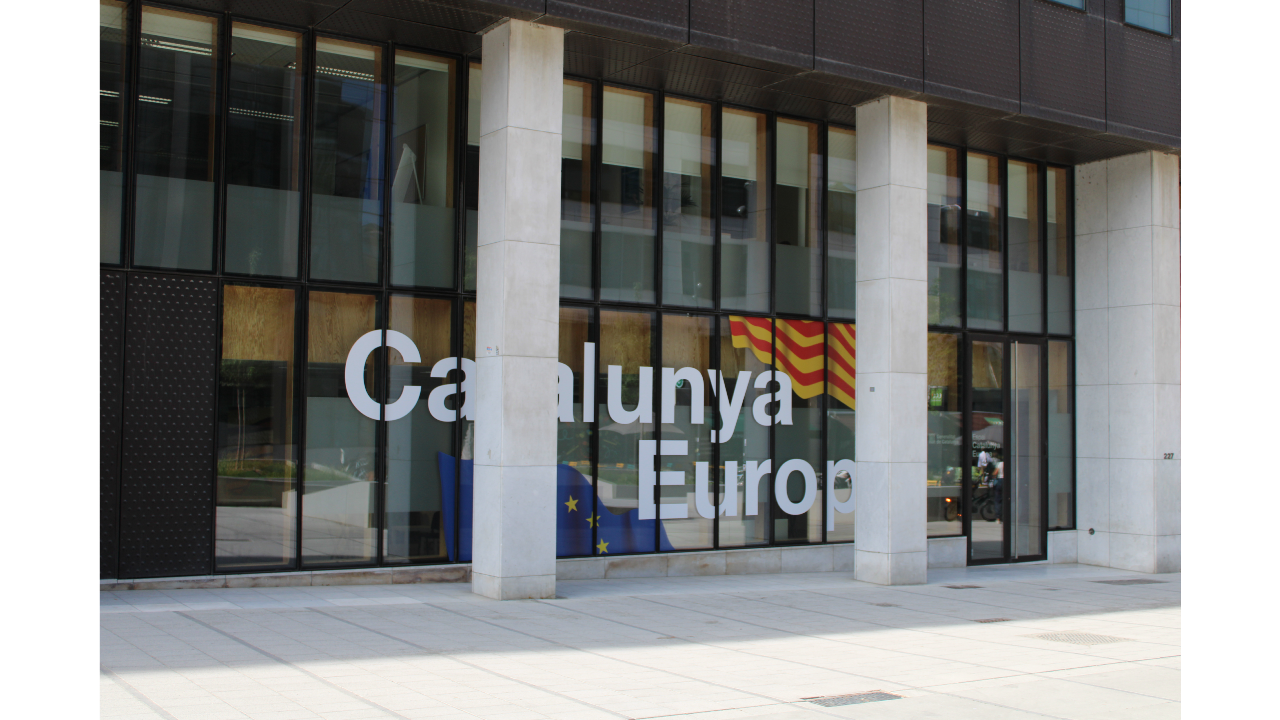
In a transforming Europe, marked by a turbulent and changing international context, the Delegation has worked to broaden participation, enhance political influence, and consolidate Catalonia’s role as a relevant actor within the European project.
The implementation of the Brussels Plan has been key to strengthening Government coordination, ensuring coherent institutional action in Brussels, aligning foreign policy with European priorities, and equipping it to meet current challenges.
Expanding participation with the European Union
The Delegation has worked to ensure Catalonia is present in the spaces where European policies are debated and decided. It has actively monitored EU dossiers of interest to Catalonia, resulting in active participation in the Committee of the Regions, coordination of Spain’s autonomous communities in the EU Council of Ministers sessions, meetings with European Commission representatives, and joint actions with other partners and regional networks.
Catalonia has participated at the highest level in the European Committee of the Regions. In early February, the President of the Generalitat, Salvador Illa, attended his first plenary session, emphasising the need for regions to play an active role in a social and cohesive Europe.
Between May and December, Minister Jaume Duch took part in meetings, commissions, and plenary sessions of the Committee, presenting an opinion on decentralised cooperation within the Global Gateway initiative. This was unanimously approved in the final December plenary, confirming Catalonia’s consolidation as a key player in development cooperation.
The Catalan Government also resumed its participation in the EU Council of Ministers at the start of the year, with regional representation in the Fisheries Council, marking the first time in thirteen years. This allowed Catalonia to take part in debates defending Mediterranean fisheries.
The Delegation also worked with the relevant departments on regional representation in the Education and Culture Council, enabling Catalonia to participate in key European debates in these areas.
Looking ahead to 2026, Catalonia will coordinate regional representation in the Council of Ministers on sports—a new area for European cooperation and visibility, taking place in the second half of the year.
Strengthening Catalonia’s political influence
The Government’s Delegation to the EU has intensified its influence on European policies, particularly in the ongoing negotiations for the next Multiannual Financial Framework (2028–2034), which will shape the EU’s direction in the coming years. Catalonia has advocated a decentralised approach, with an active role for regions, as reflected in the Government’s joint position.
The Delegation has also defended cohesion, together with Spain’s autonomous communities (Galicia Declaration) and other European regions, through EURegions4Cohesion, the Conference of Peripheral Maritime Regions (CPMR), and the Four Motors for Europe.
Key events included the Four Motors for Europe debate on cohesion and competitiveness, promoting territorial cooperation, innovation, and economic development between Baden-Württemberg, Lombardy, Auvergne-Rhône-Alpes, and Catalonia; and the Summit of the Alliance for Disruptive and Emerging Technologies (DETA), addressing ethics and reliability in AI governance. Catalonia has held the presidency in both networks, positioning the Delegation as a centre for decision-making and dialogue in Brussels.
In October, the Delegation took an active part in the 23rd European Week of Cities and Regions in Brussels, participating in at least nine events on topics such as gender equality, rural communities, the housing crisis, cohesion, and strategic competitiveness, strengthening Catalonia’s voice in European regional policy.
Consolidating Catalonia’s role as a relevant actor in Brussels
The Delegation has opened its doors to create dialogue and projection spaces, hosting institutional representatives, entities, social partners, regional networks, European organisations, and Catalan talent.
On St George’s Day, the Delegation became a cultural and institutional meeting place; in May, on Europe Day, the Government organised events reaffirming Catalonia’s commitment to European values; and in September, it celebrated the National Day of Catalonia in Brussels—a symbolic moment connecting with the EU.
Catalonia’s presence has also been reflected in cultural exhibitions and initiatives highlighting its history, culture, and social projects, including displays on the Mossos d’Esquadra in Europe, the EUMies Awards 1988–2025, the Catalonia World Region of Gastronomy exhibition, and an exhibition on Montserrat, along with meetings with students, orientation sessions for newcomers, and cultural events with the Casal Català and Instituto Cervantes.
Promoting the Catalan language in the European Union
In 2025, initiatives to promote and protect Catalan in Europe have been strengthened, reflecting one of Catalonia’s priorities as a social cohesion and cultural identity tool.
Since April, Catalan has been permitted in plenary sessions of the European Economic and Social Committee (EESC), as it already is in the Committee of the Regions and the EU Council of Ministers, where Ministers Esther Niubó and Sònia Hernández have spoken in Catalan. Catalan has also been introduced as an optional language in the curriculum of European Schools.
Looking to the future
2025 has been a year of political initiative, expanded participation, and consolidated presence for Catalonia in Europe. The Delegation has established a solid foundation to face future challenges, with particular focus on the new Multiannual Financial Framework, cohesion policy, competitiveness, housing, water resilience, and strategic sectors such as digital technologies, artificial intelligence, semiconductors, space, quantum technologies, and Mediterranean policy.
In 2026, the 40th anniversary of Spain’s accession to the current European Union will be celebrated, presenting “a new opportunity to reaffirm our commitment, continue contributing to a cohesive, democratic, and prosperous Europe, while reinforcing the values that unite us,” emphasised Delegate Ester Borràs.